
Amsterdam Travel Guide (2026): Best Things to Do + Budget Tips

Sam BarkerFEB 27, 2026 | 11 min read
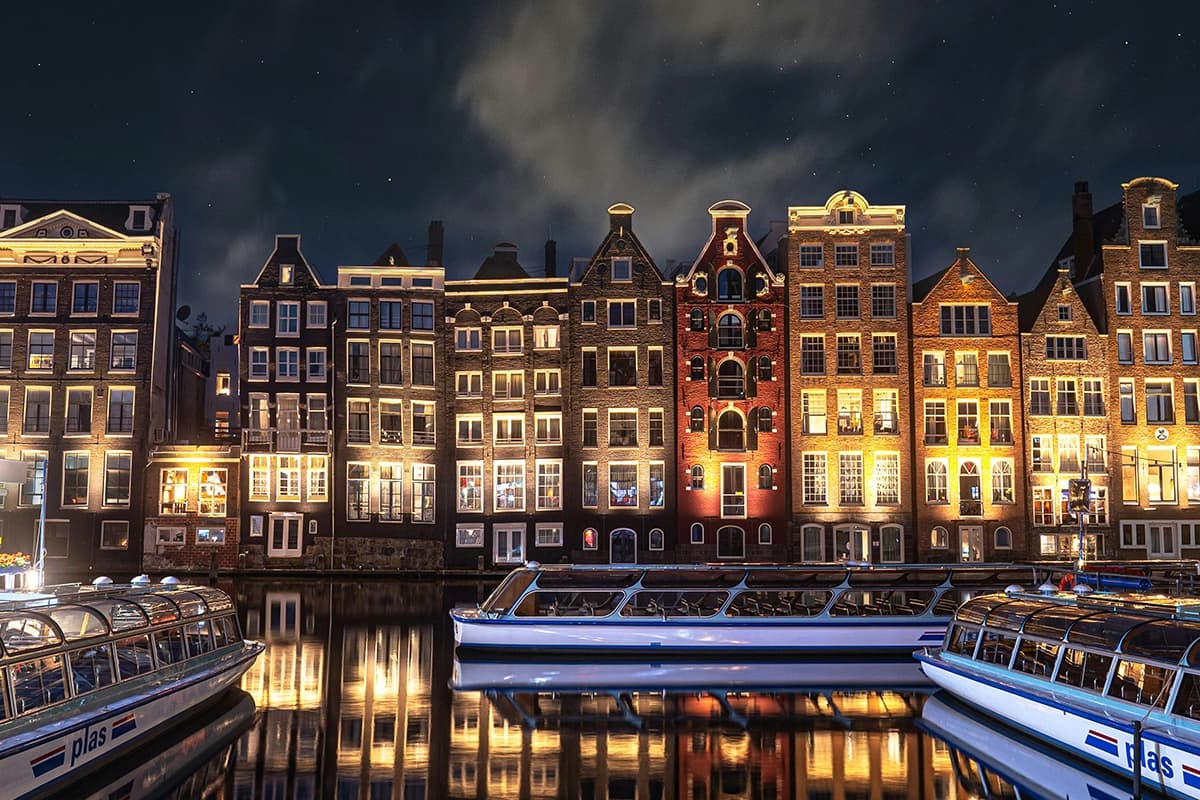
Planning Amsterdam in 2026? This guide covers the best things to do, realistic daily budget, where to stay, Red Light District etiquette, and a smart 3-day itinerary for first-time visitors .
Categories
TL;DR: Key Takeaways
- Amsterdam is in North Holland, Netherlands, and is very walkable.
- Ideal trip length: 3 to 4 days.
- Anne Frank House tickets are released every Tuesday at 10:00 CET for visits 6 weeks later.
- Rijksmuseum and Van Gogh Museum use timed entry; book early in peak periods.
- Accommodation cost planning should include city tourist tax and applicable VAT context.
- Best first-time mix: Canal Belt + museum district + Jordaan + Amsterdam-Noord.


Quick Facts
- Best seasonSpring and early fall
- Ideal stay3 to 4 days
- WalkabilityExcellent
- CurrencyEuro (EUR)
- Main airportSchiphol (AMS)
- Airport to centerAbout 15-20 min by train
Daily Budget Breakdown
| Category | Estimated Cost |
|---|---|
| Accommodation | EUR 150-260 |
| Food and drink | EUR 60-110 |
| Local transport | EUR 8-15 |
| Attractions | EUR 35-70 |
| Total/day | EUR 253-455 |
Disclosure: this guide may include affiliate links. If you book through these links, we may earn a commission at no extra cost to you.
Find Budget Stays in Amsterdam Travel Guide (2026)
Compare hostels and budget hotels with flexible cancellation and neighborhood filters.
Compare staysQuick answer
For most first-time travelers, the best way to experience Amsterdam in 2026 is a 3-day plan that combines one major museum slot per day, a neighborhood walk, and one flexible low-cost activity. Amsterdam is compact, highly walkable, and easy to navigate by tram, ferry, and train. If you book high-demand tickets early and avoid overpacked schedules, you can enjoy top highlights without burning your budget.
Where Amsterdam is and why it is easy to explore
Amsterdam is in the western Netherlands, in the province of North Holland. Even as the national capital, it feels human-scale because much of the visitor core is concentrated around canals, museums, and compact neighborhoods.
For first-time planning, use the city hub first: Amsterdam destination hub.
Essential things to do in Amsterdam

1) Walk the Canal Belt early
Start your day in the Canal Belt before 10:00. Mornings are quieter, photo conditions are better, and it is easier to enjoy the architecture without heavy foot traffic.
2) Visit the museum district with timed-entry strategy
Rijksmuseum
One of the top cultural attractions in Europe. Late afternoon slots can feel less crowded than peak morning waves.
Van Gogh Museum
Timed entry is required. Buy tickets from official channels in advance, especially in high season.
Anne Frank House
Ticket policy is strict. Tickets are released every Tuesday at 10:00 CET for dates six weeks later. There are no regular on-site sales for sold-out dates.
3) Explore Jordaan and the Nine Streets
Jordaan gives you canals, independent boutiques, and local cafes in a compact loop. This is a strong half-day zone that pairs well with Anne Frank House.
4) Add Amsterdam-Noord for contrast
Take the free ferry behind Amsterdam Centraal to Noord. NDSM area adds industrial-creative energy and balances the classic
canal postcard experience.
5) Take one canal cruise, but pick quality over volume
Prefer small electric boats or quieter evening options. Skip large party boats if your goal is scenery and comfort.
Red Light District (De Wallen): etiquette and 2026 context

De Wallen remains one of the most visited areas in Amsterdam, but regulations and enforcement focus have tightened in recent years.
What matters for visitors:
- Do not photograph workers in windows.
- Keep noise low at night in residential streets.
- Follow local signs and current municipal rules in the area you are walking.
- Avoid street dealers.
If you want architecture and history, go in daytime. If you want the neon atmosphere, go in the evening and stay respectful.
Where to stay in Amsterdam
| Travel style | Best area |
|---|---|
| First visit, central access | Canal Belt / Centrum |
| Boutique and quiet charm | Jordaan |
| Trendy, social, food scene | De Pijp |
| Better value with ferry access | Amsterdam-Noord |
| Nightlife focus | Leidseplein area |
For transport-first planning, pair this guide with: Amsterdam airport transfer guide.
Important tax note
The city tourist tax is currently set at 12.5% of the overnight accommodation price excluding VAT. Final payable totals depend on accommodation type, base rate, and platform fee structure. Always confirm full checkout totals before booking.
Smart 3-day Amsterdam itinerary

Day 1: Canal core + museum anchor
- Morning Canal Belt walk
- Rijksmuseum
- Evening canal cruise
Day 2: Anne Frank + Jordaan loop
- Anne Frank House (pre-booked slot)
- Jordaan + Nine Streets
- Brown cafe evening
Day 3: Noord contrast day
- Free ferry to Noord
- NDSM area
- Optional viewpoint stop
Optional extension: add one day trip only if your core city plan is complete.
How to save money without losing experience
- Book high-demand museum slots first, then build the day around them.
- Use neighborhood clustering to avoid expensive zig-zag transport.
- Prefer one strong paid attraction per half-day, not stacked paid slots.
- Refill water (Amsterdam tap water is high quality).
- Use official websites for ticket checks and policy updates.
Amsterdam itinerary 3 days: booking timeline that prevents sold-out slots
This is the practical sequence that reduces friction for first-time travelers and keeps the trip coherent.
6-8 weeks before arrival
- Confirm your base area and lock accommodation first.
- Reserve Anne Frank House when your date window opens.
- Reserve Van Gogh Museum and Rijksmuseum slots for different half-days.
2-3 weeks before arrival
- Finalize your airport transfer plan from Schiphol to your accommodation zone.
- Map one neighborhood cluster per half-day (Centrum, Jordaan, Museumplein, Noord).
- Pre-select two rain-backup options for each day.
48 hours before arrival
- Re-check opening hours and strike/service updates.
- Confirm meeting points for tours or canal cruise operators.
- Save all ticket QR codes offline.
This sequence is useful because Amsterdam demand is less about total attractions and more about timed-entry coordination.
Amsterdam budget travel: realistic spend controls that actually work
If your goal is strong value, focus on route efficiency and ticket strategy, not just finding the cheapest hotel line item.
| Cost lever | Typical mistake | Better move |
|---|---|---|
| Museums | Booking same-day and accepting expensive leftover slots | Lock timed-entry inventory first, then plan meals/transit around it |
| Accommodation | Choosing lowest nightly rate far from daily route | Choose the area that minimizes daily zig-zag transport |
| Food | Eating in high-footfall canal hotspots only | Use side streets in Jordaan/De Pijp for better price-quality balance |
| Transport | Paying ad-hoc without route plan | Bundle activities by neighborhood and reduce unnecessary tram hops |
For many visitors, a disciplined route plan saves more than coupon hunting.
Best area to stay in Amsterdam by trip style
Use this matrix before booking, especially if this is your first trip.
| Area | Best for | Trade-off | Budget pressure |
|---|---|---|---|
| Centrum / Canal Belt | First visit + landmark access | Busiest footfall and higher room pricing | High |
| Jordaan | Walkable charm + cafes + canals | Limited larger hotel inventory | Medium-High |
| De Pijp | Food scene + local energy | Slightly longer transfers to some landmarks | Medium |
| Amsterdam-Noord | Better value + modern stay options | Ferry dependency for old-center access | Medium |
| Oud-West | Balanced access + local rhythm | Fewer iconic postcard views near hotel | Medium |
If your plan includes early museum slots, stay where your first two mornings are shortest and simplest.
Red Light District Amsterdam rules: practical behavior checklist
The area is popular, but visitor behavior standards are strict and should be respected.
- No photos of window workers.
- Keep voice levels low in residential streets at night.
- Follow posted signs and municipal instructions.
- Do not buy from street dealers.
- Travel in pairs late at night when possible.
This is the fastest way to avoid legal trouble and social friction while visiting De Wallen.
Amsterdam city attractions: rain-proof backup plan
Because weather can shift quickly, keep one indoor backup option for each day.
| If weather turns bad | Backup attraction |
|---|---|
| Canal walk canceled | Rijksmuseum extension blocks or Stedelijk visit |
| Noord outdoor loop canceled | STRAAT Museum or indoor creative venues at NDSM |
| Long photo day canceled | Museum quarter + relaxed brown cafe route |
A backup-first mindset prevents expensive last-minute decisions.
Amsterdam hotel prices 2026 by zone and season (real planning ranges)
Use these ranges as a practical baseline for mid-range double rooms, then validate exact dates before booking.
Canal Ring / Centrum (premium convenience)
| Period | Typical range | Notes |
|---|---|---|
| Jan-Feb (low season) | EUR 100-180/night | Often 40-50% below summer levels |
| Mar-May + Sep-Oct (shoulder) | EUR 140-220/night | Strong balance for weather and price |
| Jul-Aug (peak) | EUR 180-350/night | Highest pressure windows; event dates can surge more |
Named benchmarks used for planning:
- The Hoxton Amsterdam: around EUR 180-280.
- Pulitzer Amsterdam: around EUR 220-350.
- DoubleTree by Hilton Amsterdam: around EUR 140-220.
De Pijp (mid-range value with good connectivity)
Mid-range stays often run around EUR 90-150/night, usually EUR 20-40 below similar Jordaan options, with practical tram access to museum corridors.
Jordaan (charm + walkability)
Mid-range and boutique properties are often around EUR 120-200/night, with many core attractions reachable in roughly 15-20 minutes on foot.
Amsterdam-Noord (value zone)
Noord properties are often EUR 30-50 below equivalent central canal-zone pricing, with free ferry access back to Centraal.
Booking rule that consistently saves money
For most trips, booking 3-4 months ahead and favoring Sunday-Thursday nights can materially reduce total stay cost versus last-minute or Friday-Saturday heavy plans.
Best transport and museum combos by traveler profile (2026)
Budget traveler combo
- Use free GVB ferries from Amsterdam Centraal (for example F3 Buiksloterweg route family).
- Pair with Amsterdam-Noord low-cost blocks (EYE area, waterfront walks, NDSM side depending on route choice).
- If you only need a few tram or metro legs, OVpay pay-as-you-go can be cheaper than multi-day products.
Best low-friction idea: free ferry segment + one neighborhood loop + one timed museum anchor.
Family combo
- Use a GVB day or multi-day pass for simple all-day mobility.
- Build around Tram 2 corridor for Museumplein access (Rijksmuseum / Van Gogh zone).
- Add one child-friendly attraction per half-day (NEMO, Artis, open-space breaks).
This reduces decision fatigue and prevents overpacked museum-only days.
Couple combo
- The I amsterdam City Card can work well when you plan multiple paid attractions plus transport.
- Combine one signature museum, one canal segment, and one alternative district half-day (Noord/NDSM) for variety.
This usually gives better trip quality than stacking too many paid entries in a single day.
2026 fare context to check before purchase
- GVB day and multi-day products should be compared against your exact ride volume.
- Amsterdam and Region Travel Ticket can be better value when your plan includes out-of-city hops.
Always verify live prices and product rules on official operators before checkout.
Local venue picks that add quality (not generic tourist filler)
Specialty coffee
- Lot Sixty One (Kinkerbuurt): one of the city's benchmark specialty coffee references.
- Haku Coffee (Jordaan / Rozengracht): calmer design-forward stop with rotating ceramics and strong bean curation.
- Morning Owl (Zeedijk edge): compact local-feel stop near the historic center corridor.
- SAINT-JEAN Bakery (Jordaan): high-demand plant-based bakery known for laminated pastries.
- Elevate Coffee Lab (De Pijp): minimal coffee-first setup focused on curated roasts.
Food and atmosphere
- Kantjil & de Tijger (Centrum): classic rijsttafel option with consistent reputation.
- Pllek (NDSM, Noord): shipping-container setting + waterside atmosphere, especially good when paired with a ferry segment.
- Grand Cafe Restaurant 1e Klas (Centraal): historic station interior with heritage value beyond a standard cafe stop.
Use these as optional quality anchors around your fixed museum slots rather than as a rigid checklist.
Continue planning

Final Thoughts
Amsterdam isn’t just canals and museums. It’s quiet mornings before the crowds. It’s industrial art spaces in Noord. It’s centuries of history compressed into walkable streets.
If you approach the right things to do in Amsterdam strategically — booking smart, timing wisely, and exploring beyond the obvious — you’ll experience the city fully.
Walk slowly. Avoid the red lanes. And let Amsterdam unfold naturally.
Mistakes to Avoid
Booking Anne Frank House too late
Many travelers assume walk-in availability. In practice, popular slots sell out quickly.
Trying to cover every district in one day
This creates rushed schedules, extra transport costs, and lower-quality experiences.
Choosing accommodation by nightly price only
A cheaper hotel can cost more overall if daily transfer time and transport spend increase.
Ignoring bike-lane rules while walking
Red lanes are for cyclists. Staying out of bike lanes improves both safety and flow.
Taking taxis by default
For many central routes, train and tram are usually cheaper and often just as fast.
Travel Essentials for Budget Trips
Use our curated checklist for packs, adapters, and trip essentials that fit carry-on travel.
Open checklistFAQ
How many days do I need in Amsterdam?
one major museum, Day 2 on Anne Frank House plus Jordaan, and Day 3 on Amsterdam Noord or flexible neighborhood time. If you want day trips, add a 4th day.
Is Amsterdam expensive in 2026?
Yes, Amsterdam is generally expensive compared with many nearby European capitals. You can still control costs by booking key tickets early, grouping activities by neighborhood, and limiting unnecessary taxi use.
For many travelers, daily spend depends most on accommodation location and museum choices.
Are Anne Frank House tickets hard to get?
Yes. Demand is high, and official release windows can sell out quickly. Anne Frank House typically releases tickets on a fixed schedule (commonly Tuesday at 10:00 CET for visits about six weeks later).
Check the official site and book as soon as your dates are confirmed.
Is the Red Light District in Amsterdam safe to visit?
Generally yes, especially on main streets with regular foot traffic. Stay aware at night, avoid street dealers, and follow local rules.
Do not photograph sex workers in windows, and respect signage and neighborhood quiet hours where enforced.
Do I need to stay in Centrum?
No. Centrum is convenient, but not required. Jordaan is great for first-time charm, De Pijp for food and local vibe, and Amsterdam-Noord for better value with easy ferry access. Choose your base by daily route plan, not just nightly room price.
What are the top things to do in Amsterdam for first-time visitors?
Start with the Canal Belt, Rijksmuseum, Van Gogh Museum, Anne Frank House, and a walk through Jordaan. Add Amsterdam-Noord for a different side of the city.
This mix gives you history, art, local neighborhoods, and modern culture in one short trip.